
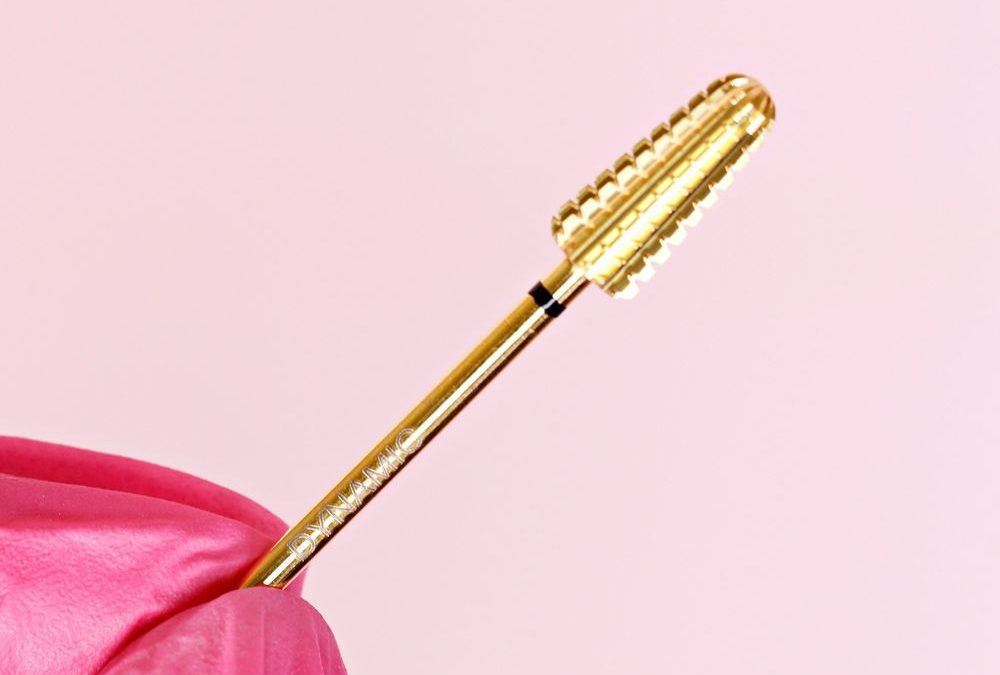
You’re in a small studio corner with a polished silver handpiece balanced on a soft blush pink towel, a lamp on, client settled, and a bright gold volcano bit waiting in the tray — the scene is tidy and professional and you want the removal to be efficient without sacrificing the natural nail. The Extra Coarse Volcano Bit – Gentle, with its heavily textured gold flutes and reflective silver surfaces, is designed to cut through acrylic, hard gel, and dipping powder so you can work quickly while watching for heat and thickness.
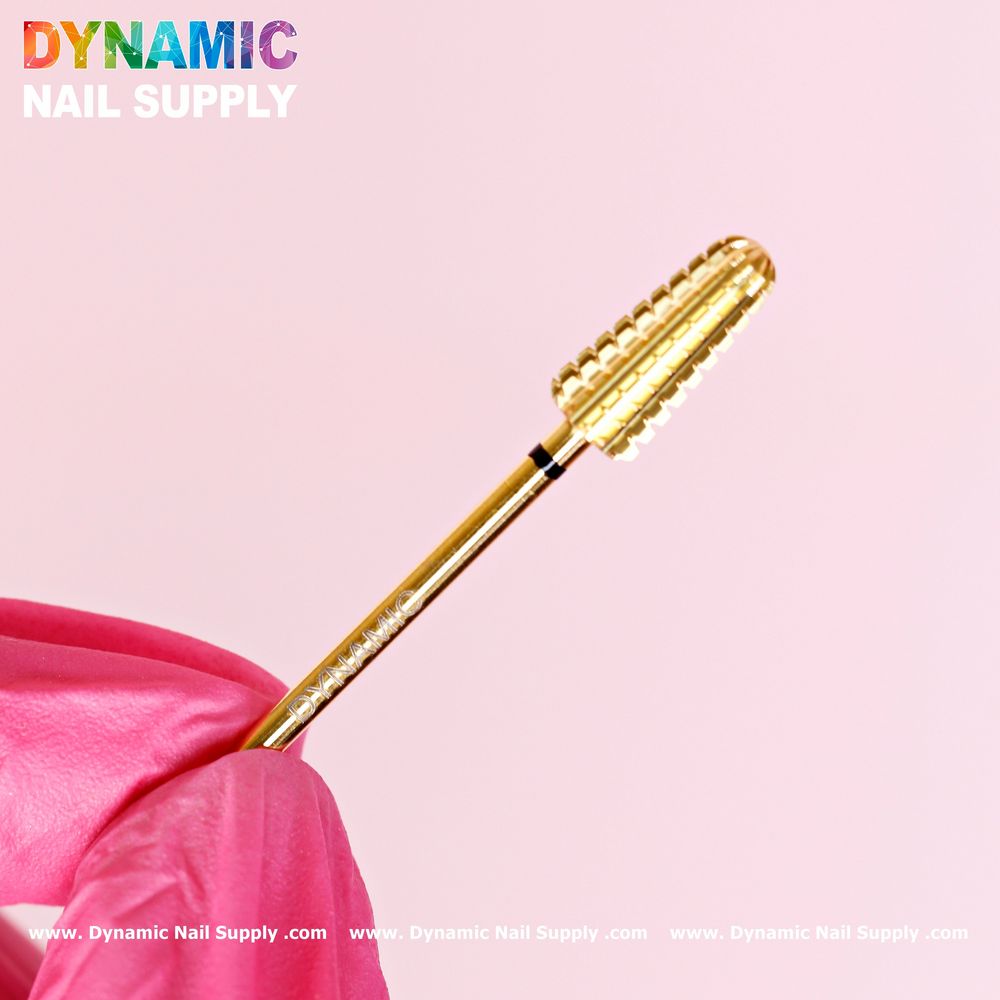
How to set up your station for fast, safe removal
Start by arranging a small kit: your polished silver handpiece, the gold Extra Coarse Volcano Bit – Gentle, a matte beige tool holder, lint-free wipes, a little acetone or remover jars if you use soak techniques, and a dust collection cloth. Keep a small black ring or rubber stop for quick bit changes visible and wipe your bit on a clean, non-abrasive pad between clients. Use a low-dust approach — the bit’s cut pattern produces less visible dust than some alternatives, but basic hygiene and a respirator mask are still sensible.
How to choose speed, pressure, and drill angle
The Extra Coarse Gentle design works best at moderate RPMs where aggressive removal is controlled rather than frantic. In practice, start around a medium speed setting and adjust upward only if you’re not getting efficient material removal; high speed can create heat and reduce tactile feedback from the bright gold flutes. Use light, consistent downward pressure and let the tungsten carbide texture do the work; pressing hard risks chatter and heat transfer to the nail plate. Hold the handpiece at a shallow angle — roughly 10–20 degrees from the nail surface — so the flutes skim rather than gouge, and approach the free edge first to take bulk off before refining near the cuticle.
How to read visual feedback from finishes and surfaces
The bit’s bright gold, high-gloss flutes and the polished silver of the handpiece are not decoration only — they give visual cues. Watch the reflective surfaces for tiny flashes of removed product and for buildup in the grooves; a shiny flute with trapped powder indicates it’s time to pause and clean the bit. The contrast between the gold texturing and the soft blush-pink negative space of your station makes it easier to see removed layers as you work, helping you avoid over-filing the natural nail. If the surface of the natural nail begins to look unusually polished or glassy, back off immediately — that’s visual evidence you’ve hit natural keratin.
For the exact tool in this article and its finish, note the following quick reference:
You can see the special Extra Coarse Gentle design and colorway here:
Extra Coarse Volcano Bit – Gentle
How to remove bulk, edges, and near-cuticle areas step-by-step
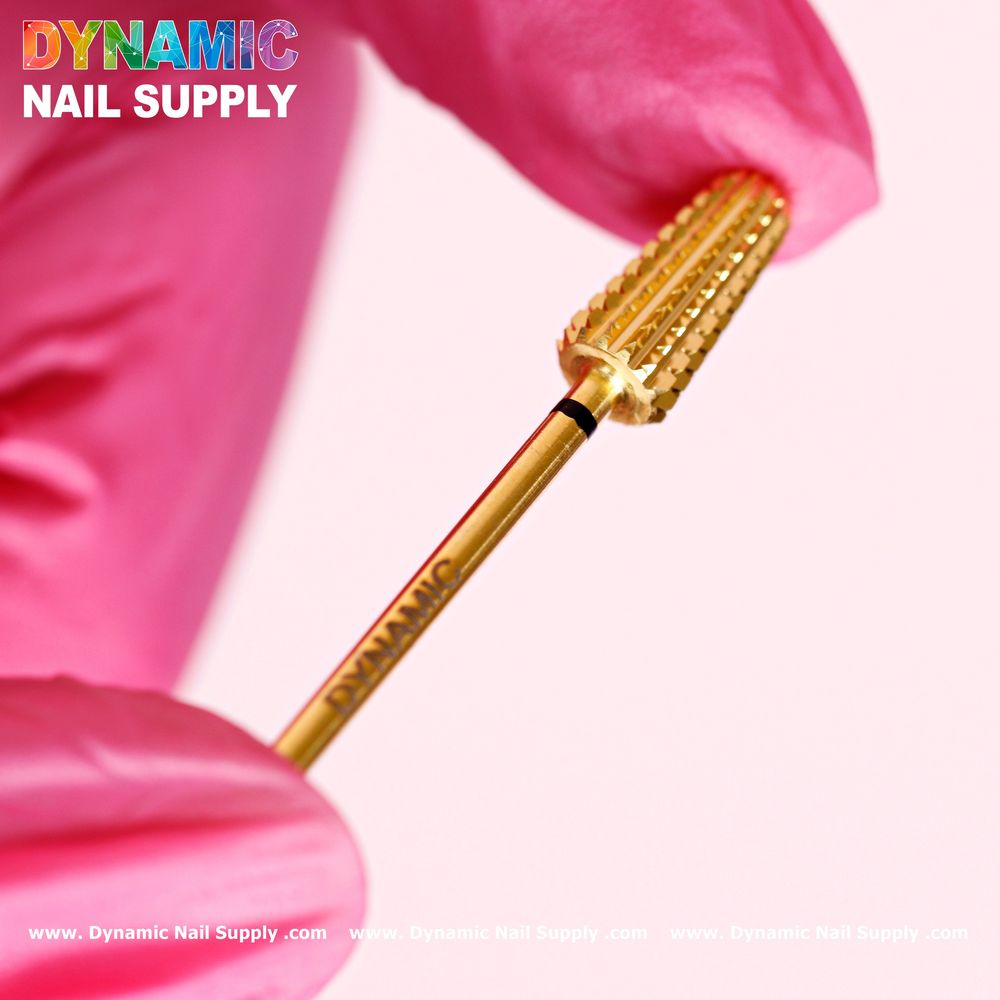
- Start with a visible inspection: identify lift, thickness, and any intact free edge.
- Bulk removal: using the gold volcano flutes, work the free edge and underside first at medium speed, holding the bit at a slight angle to remove large volume quickly without contacting the nail bed.
- Edge refinement: reduce speed slightly and lighten pressure as you approach lateral edges and sidewalls to avoid nicking skin; the textured extra-coarse surface will still cut but with more control when you ease up.
- Cuticle line: switch to a finer bit or lower RPM when you’re within 1–2 mm of the cuticle area; the volcano bit’s aggressive profile is not for the thin margin directly against the eponychium.
- Final check: wipe debris, inspect the plate under good light, and repeat brief passes only where product remains, watching for the natural nail’s shine changes.
How to handle safety, hygiene, and care for the bit
Wear eye protection and a dust mask or respirator when removing product, and keep a steady ventilation flow if possible. The bit is tungsten carbide with stainless elements; clean it between clients with a brush and then disinfect according to your salon protocols — avoid soaking carbon steel tools in chlorinated disinfectants unless recommended. Replace the bit when cutting efficiency drops or when flutes show dulling. A little heat can occur; if a client reports warmth, stop and let both bit and nail cool before continuing. Store the bit in the matte beige holder to prevent edge damage and maintain the bright finish.
How to integrate this bit into a compact travel kit
For mobile appointments you can build a slim kit around the volcano bit: a small padded case with the polished silver handpiece, the gold Extra Coarse Volcano Bit – Gentle in its own foam slot, a compact dust cloth, a tiny bottle of cleaner, and a spare rubber ring. The diagonal composition of the bit and handpiece — bright metal against pastel lining — makes it easy to spot in a bag, so you waste no time swapping bits between clients. Keep the kit lightweight and organized so you can focus on removal technique rather than rummaging for tools.
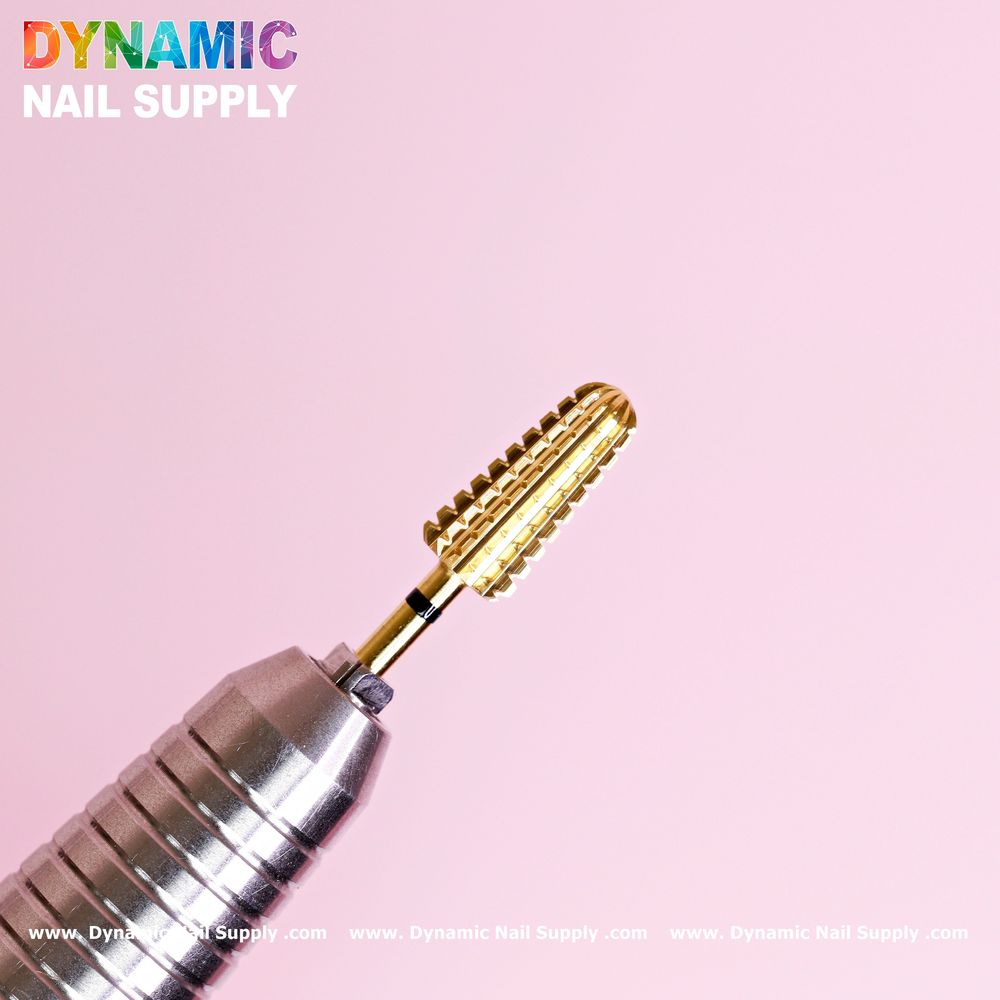
Mini Glossary
- Flutes — the textured cutting grooves on the bit’s head.
- RPM — revolutions per minute; speed setting on your handpiece.
- Bulk removal — removing thick layers from the free edge and mid-nail.
Quick reference checklist:
- Medium RPM, light pressure, 10–20° angle
- Free edge first, then edges, finish near cuticle with finer tools
- Watch gold flutes and silver handpiece for visual feedback
- Clean, disinfect, cool, and store in holder after use
Price note: this Extra Coarse Volcano Bit – Gentle retails near $9.89; prices may change.